
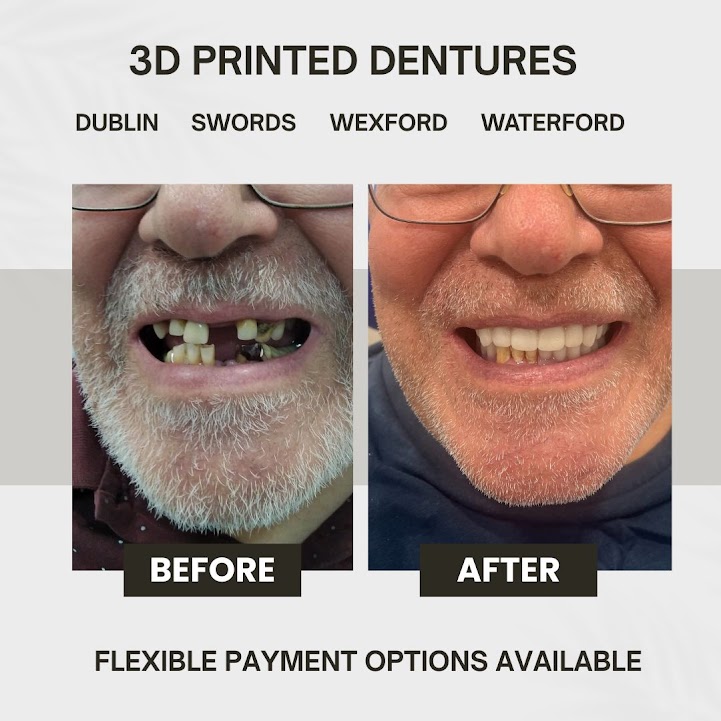
Dentures replace missing teeth and can help with eating, speaking and appearance. How they stay in place depends on the type of denture and the shape and condition of your mouth. Here is what to expect from full and partial dentures.
Full and partial dentures
A full denture replaces all teeth in the upper or lower jaw. A partial denture replaces some missing teeth while you keep others. Partial dentures can be made with an acrylic or metal framework, with the design tailored to the remaining teeth and gums.
Your clinician will assess which option is suitable and discuss alternatives where appropriate.
How they stay in place
Full dentures depend on close contact with the tissues of the mouth, the shape of the denture and saliva. Stability varies; the lower denture can be more challenging because the tongue moves nearby and the supporting ridge may be smaller.
Partial dentures may use clasps or other designed features to engage remaining teeth. Implant-retained dentures use attachments to implants and require a separate assessment and surgical treatment.
Why a denture can become loose
Your mouth can change over time, particularly during healing after tooth removal. Wear and changes in the gums or jaw can affect the fit. Dry mouth can also make dentures less comfortable.
Do not assume that slipping or soreness is something you have to tolerate. A fit review can identify whether adjustment, relining or a different treatment is needed.
How your denture is made
The team records your mouth using impressions or, where suitable, digital scanning. They also assess how your jaws meet. Trial stages can help check appearance and tooth position before completion.
Digital methods are one option, not a guarantee that conventional impressions will never be needed. Ask which approach fits your case and how many appointments are likely.
Getting used to eating and speaking
New dentures take practice. Start with manageable pieces of softer food and follow your clinician’s advice. Practising speech can also help you adapt.
Persistent pain, slipping or difficulty using the denture should be reviewed. Do not file the base or bend clips yourself. There is no fixed lifespan or adjustment period that applies to everyone.
Everyday care
Remove and clean your dentures daily using products appropriate to their material. Clean your mouth and remaining natural teeth too. Dentures are usually removed at night unless your clinician has advised otherwise.
Keep regular check-ups to assess your mouth and the denture, even if you have no natural teeth. For a breakage, read our denture repair guide.
Frequently asked questions
Answers to common questions about how dentures function.
What is the difference between full and partial dentures?
Full dentures replace all teeth in an arch. Partial dentures replace some teeth and are designed around the teeth you still have.
Do all dentures need implants?
No. Conventional removable dentures do not need implants. Implant-retained options involve a separate assessment and treatment plan.
Why is my lower denture less stable?
The supporting tissues and the movement of the tongue can make lower denture stability more challenging. A clinician should assess the fit and your options.
Can dentures be made from a digital scan?
Digital scanning may be suitable in some cases. Your clinician will explain whether scans, conventional impressions or a combination are needed.
Must dentures be replaced every five years?
There is no single replacement interval for everyone. Fit, wear, damage and changes in your mouth guide the decision.
Do I still need check-ups with no natural teeth?
Yes. Your clinician should check your oral tissues, the denture’s condition and its fit.
Further reading: Dentures (NHS) and Removable partial dentures (Leeds Teaching Hospitals NHS).
Explore your denture options
Book a consultation to discuss your missing teeth, denture options and the treatment plan that suits your mouth.